Take This Here
“She don’t feel good again. Came home with a cold.” Mom
“Well, fix her some of that boneset. She be alright.” Dad
“Girl, take this here. Now! It’ll make you feel good.” Mom
You’re a kid and if you don’t drink this concoction, you know a nastier tasting one would be coming. So what do you do? Drink it or feign feeling better miraculously?
“I’m good Mama, I’m good.” Me
During the Great Migration “up north” like to New York City, colored natives of the Carolinas and Virginia were often unable to access immediate, affordable healthcare in their new settings. African-ancestored and Native-ancestored people from down South frequently conjured up teas, salves, tinctures, soups, decoctions and baths from the barks, leaves and berries of plants they’d collected in wooded areas and grasslands by lakes, rivers, streams and the Atlantic seashore. The longer northern winters and crowded populations required these parents to rely on traditional home remedies to care for their babies and children attending public schools.
My Dad, who was born in Rutherford county, North Carolina, spent his earliest years in Cherokee, Spartanburg county, South Carolina where his father’s people had been born, enslaved, emancipated, and farmed during Reconstruction. About two hours west of Rutherford south of the looming Great Smoky Mountains are the Eastern Band of Cherokee’s tribal lands; they are descendants of the original Cherokee who remained in North Carolina avoiding the 1830 Indian removal to Oklahoma. In holding fast to some African-Americans’ persistent belief, my father always claimed to be “Cherokee.” He’d proudly say his Cherokee name was “____” which indeed sounded very similar to “Tsalagi”, the tribal name in Cherokee.
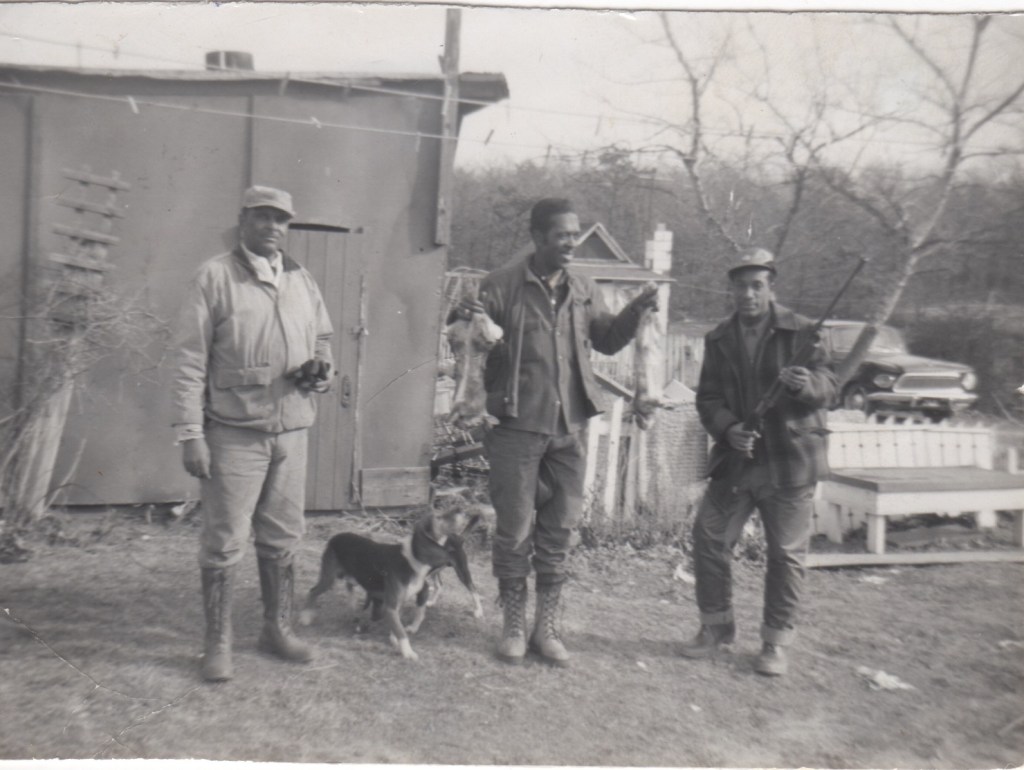
After migrating to NYC, he (far left) continued being an avid small game hunter, fisherman, superstitious and a gatherer of plants and berries for household uses. His understanding of the Cherokees’ favorite foods and plant medicine complemented my mother’s knowledge passed down to her from her Virginian and eastern North Carolina indigenous elders. Both of my parents also inherited these survival skills from their enslaved ancestors who foraged the woods and swamp edges for healing herbs like their predecessors did in their African homelands. These traditional organics were daily essentials to our family’s well-being.
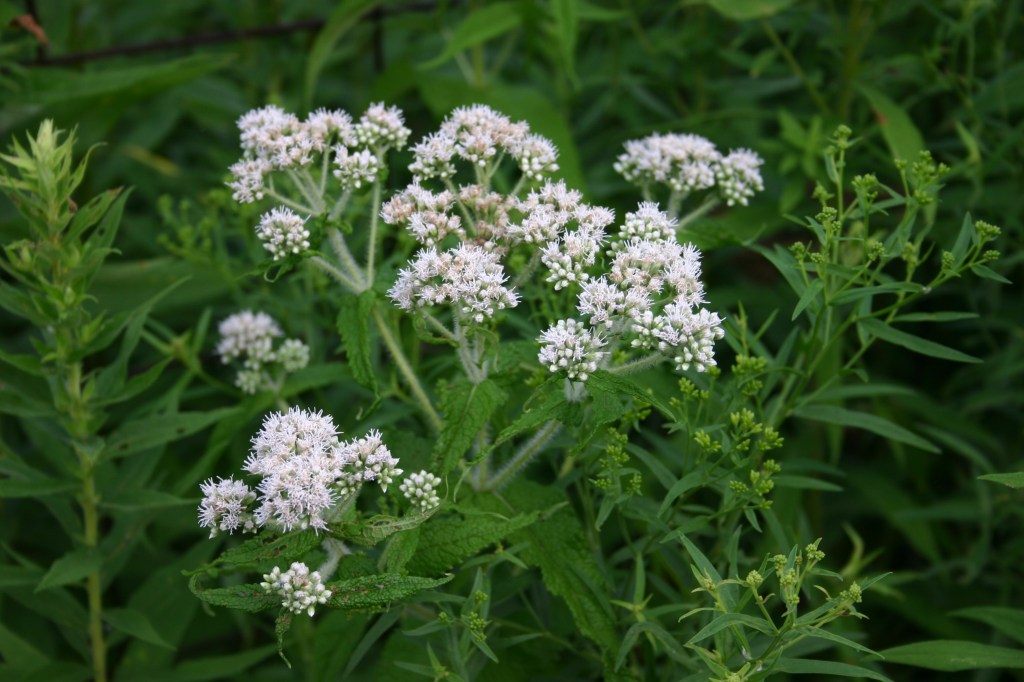
Pictured above is “common boneset” a.k.a. thoroughwort, Indian sage.
Enslaved people used boneset tea made from its flowers and leaves to relieve cold, flu symptoms, as a diuretic or emetic when afflicted by parasites and to induce sweating. Its common name may have been adopted from the plant’s effectiveness on dengue fever’s (“breakbone fever”) severe joint and muscle pains. Contemporary herbalists recognize the herb for its anti-inflammatory, antibacterial and immune support properties.
- Scientific name: eupatorium perfoliatum L.
- Family: Asteraceae
- Native American Tribe: Cherokee
- Uses: as a tonic – purgative, inducing sweat, stimulant, emetic (cause vomiting), antiseptic, typhoid fever, biliary system. As a tea – colds, flu, sore throat
References:
https://pubmed.ncbi.nlm.nih.gov/22004891/
http://naeb.brit.org/uses/species/1580/
Garrett, J. T. The Cherokee Herbal : Native Plant Medicine from the Four Directions. Rochester, Vt: Bear & Co., 2003. Print.
Garrett, J. T, and Michael Tlanusta Garrett. Medicine of the Cherokee : The Way of Right Relationship. Santa Fe NM: Bear & Co. Pub., 1919. Print.


 Ancestor Talk
Leave a reply to mckinneyword Cancel reply