Part 3 of the “Take This Here” series: African American-Native American Home Remedies
Horehound: A Deeply Rooted Bitter Cure
A healing plant’s story lasting from ancient Egypt to the American Great Migration
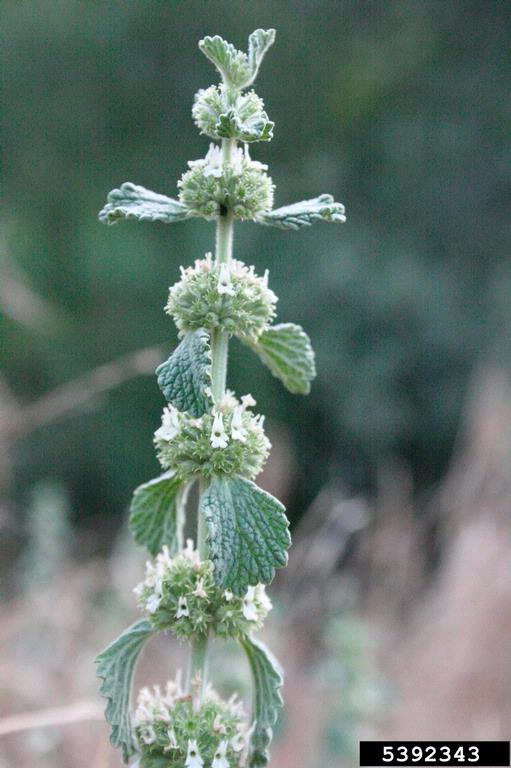
What outlasted slavery, migration and time, wasn’t only the herb but the knowledge of how to use it.
Ancestral Memories
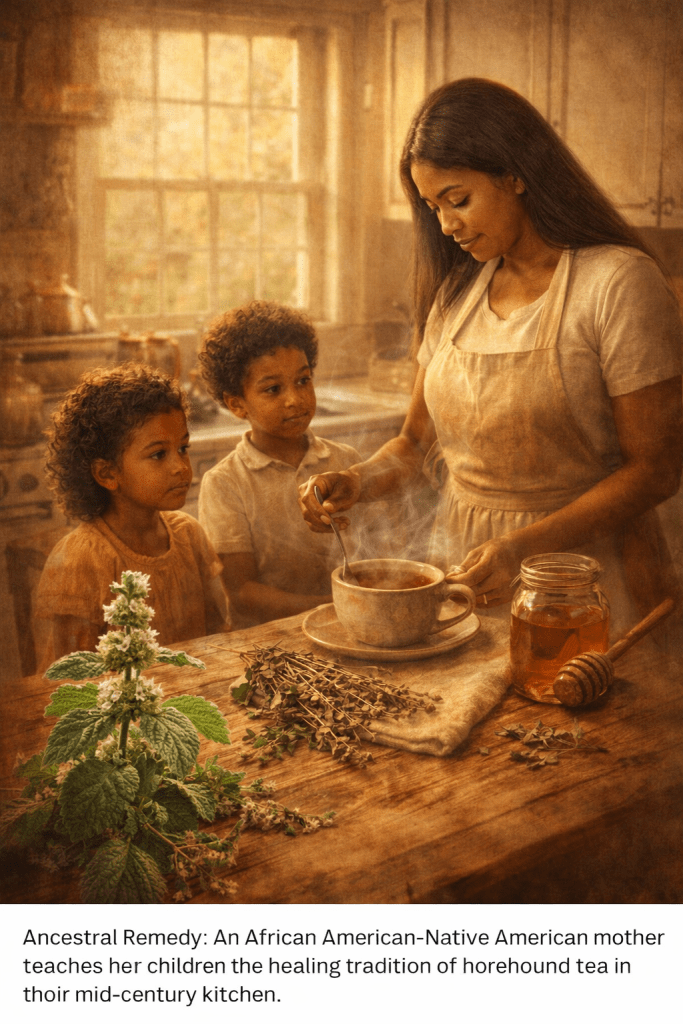
When a cough or nasty cold struck back home, another remedy came out of the medicine cabinet: horehound. Did my mother lip-sync Big Mama Thornton singing “You ain’t nothin’ but a hound dog” while she lovingly stirred honey into the icky tea for us kids? Possibly. The shared name is coincidence—today’s story is about the bitter herb, whose use reaches back to prehistoric Egypt.
My parents carried their knowledge of horehound to New York from the South during the Great Migration. My father, an avid small game hunter, likely learned from Cherokee tradition to carry horehound in his shot pouch for snake bites and wounds. The plant has been valued for its anti-bacterial and pain-relieving properties.1 In Native American medicine, its leaves and white flowers were prepared as teas, syrups and ointments to treat colds – especially in children and the elderly, for gynecological problems, as diuretics, laxatives, to lower blood pressure, to kill intestinal parasites, etc.
Historical Uses
By 1930, horehound had become so common in the United States that census records listed occupations such as “horehound breaker” and work in “horehound plants”—candy factories producing the herb’s familiar lozenges. Now, you can find horehound candies online and at Walmart or simple homemade recipes. This hardy herb is sun-loving, typically reaching 16-35 inches tall and grows worldwide. Although some of its medicinal claims are debated, horehound remains in use by herbalists and traditional medicine practitioners.
Relevant to black and brown history in America, horehound’s history extends beyond North America and the transatlantic slave trade. For example in South Africa, Afrikaners used horehound infusions to treat typhoid fever, gallbladder conditions, and asthma.2 But much earlier, pre-historic Egyptian priests associated the plant with Horus, (or Heru) the healing god, calling it the “seed of Horus” and used it as a poison antidote and in ritual practice. After Rome conquered Egypt, the Romans carried horehound throughout the Mediterranean, where it became trusted as a medicinal herb.
During the federal Works Progress Administration (WPA 1935-1939), formerly enslaved people were interviewed preserving memories of daily life including herbal healing practices. The following accounts describe horehound among the remedies used during slavery in the U.S.
Voices from the Archive
WPA South Carolina Slave Narratives Vol.14, Pt. 3
Interviewee: Martha Kelly, Marion, SC, 1 Nov 1937, pgs. 86-87
“Oh, dey had slavery time doctors to tend de people when dey was sick in dat day en time. Yes, mam, had dey plantation doctor right dere dat would go from one plantation to de other en doctor dem what was ailin. De doctor would come dere to my white folks plantation en tell my grandmother what to feed dem on en she would give dem de remedy dey tell her. Dey would use all kind of different herbs in dat day en time
dat dey would get out de old fields en de woods for dey cures. Honey, dey was good too en dey good yet. I couldn’ tell you half de herbs dey use, but I recollects dere was boneset dat was good for fever, sage for de baby, pennyroyal dat was good for girls dat catch cold, mint for sick stomach, catnip to hope a cold, horehound to strike a fever en dat bout all I recollect. No,mam, I can’ remember half de herbs dere was in de field, but I know we got some of dat sage growin dere in de garden now.”
WPA Alabama Slave Narratives, Vol.1
Interviewee: Charlie Hayes, Maysville, AL, July 1937, pgs. 174-175
“Us useta have all sorts of cures for de sick people, f’rinstance, us used de Jerusalem weed cooked wid molasses into a candy for to give chilluns to git rid of worms. Den us’d bile de root an’ make a kinda tea for de stomach worms. You know de kinds dat little puppies an’ little chilluns has dat eats all de food dat goes in to de stomach, en’ makes de chile or dog eat plenty but don’t git no benefits f’um all dey’re eatin’. Horehound, dat growed wild in Clarke County, was used for colds. Mullen tea was used for colds an’ swollen joints. Den dere was de life everlastin’ tea dat was also good for colds and horse mint tea dat was good for de chills an’ fevers. Co’se, Mistis, us niggers had a regular fambly doctah dat ‘tended to us when we was sho ‘nough down raght sick, but dese remedies I’s tellin’ you ‘ bout us used when warn’t nothin’ much ailin’ us. It was always to de owner’s interest, Mistis, to have de niggers in a good, healthy condition.”
"Take This Here" is not just about plants and herbs - it is about memory, survival, inheritance and preservation in the African American experience.
“Go sip on that horehound tea while it’s hot so you can feel better.” Dad
- J. T. Garrett, The Cherokee Herbal: Native Plant Medicine from the Four Directions (Rochester, VT: Bear & Company, 2003).
- Eve Palmer, The South African Herbal (Cape Town: Tafelberg Publishers, 1985).
 Ancestor Talk