Take This Here
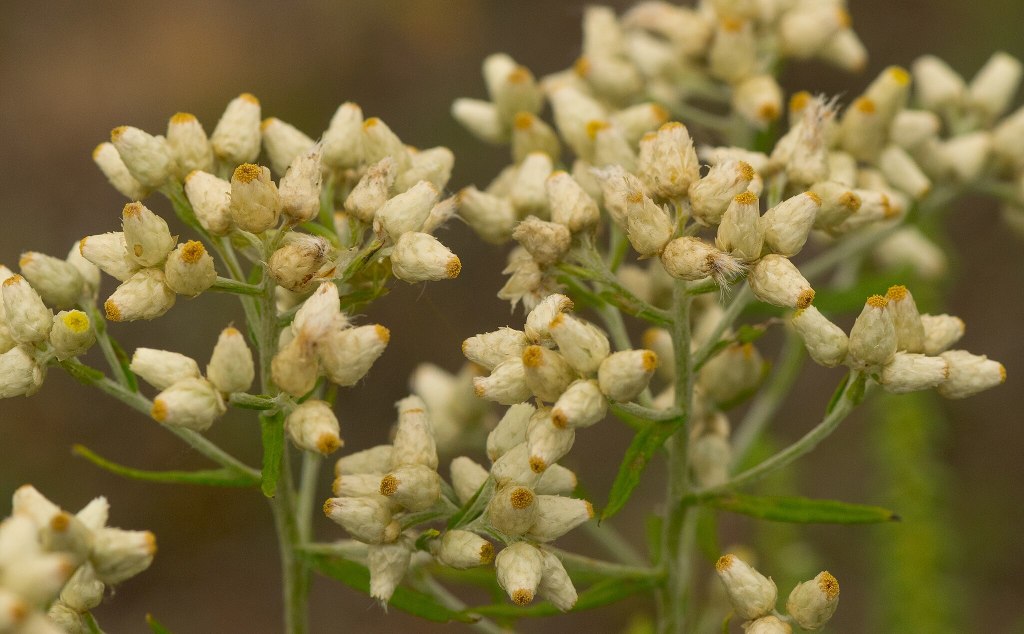
by Joshua Mayer from Madison, WI, USA, CC BY-SA 2.0 <https://creativecommons.org/licenses/by-sa/2.0>, via Wikimedia Commons
We call it “rabbit tobacco” and the Yuchi people call it “tsodasha.” This stately, aromatic plant can grow taller than three feet in southern states east of Texas and is ready to harvest in the fall when its silvery green leaves are vivid. It is found on hillsides and in wild meadows growing among other medicinal plants like boneset and yellow wildflowers. Rabbit tobacco was a mainstay in my parents’ medicine cabinet in New York City where they had brought their Carolinian Afro-indigenous customs to during the Great Migration. My Dad was especially influenced by the Cherokee people in his ancestral Carolinian home so he typically prescribed a cup of tsodasha hot tea for whatever ailed Mom, my siblings and I. The Cherokee are known to use rabbit tobacco for orthopedic and respiratory conditions e.g. colds, the flue, upset tummy, aches, pains and cramps from overworked muscles, sore throat, etc. Sipping on hot tea made from the dried leaves and flowers soothes and helps expel mucus from congested lungs.
At least seven other indigenous tribes and nations in America, the Alabama, Choctaw, Creek, Coushatta, Sac and Fox, Menominee and Rappahannock, use it for over 40 medicinal aids. Native medicine men and women (though few in number today) preserved herbal treatments for individual illnesses and ceremonial rituals. Obviously, today’s pharmaceutical companies profit from selling laboratory concoctions that often contain herbal roots. However, consumers are generally discouraged from incorporating “alternative medicine” in their health regimens, citing the lack of FDA approval.
But significantly, modern science has acknowledged the terpene compound in rabbit tobacco is indeed anti-cancer, anti-hepatitis and anti-fungal along with its more commonly known uses. According to the U.S. Department of Agriculture,“Sweet Everlasting Life” as it is also called, has and is used by these societies as: a sedative, analgesic, candy, food, “witchcraft medicine,” disinfectant, respiratory aid, orthopedic relief, anti-rheumatic, diuretic, ceremonial and personal smoke, for spiritual protection, fever, sore throat, aphrodisiac and over-all well-being. According to Aline Rothe who wrote about the Alabama-Coushatta tribe’s customs in Texas,
“‘Rabbit tobacco’ made into “bitter or strong medicine” was used for nervous spells. The tobacco was brewed into a tea, then boiled with cedar and use to bathe the face of the patient until he recovered from his nervousness. Nervous spells were thought to be brought on by ‘ghosts,’ and this strong tea was believed to have the power to drive them away. Sometimes instead of boiling the tobacco plant and cedar together, they were burned and the smoke was thought to banish the ‘ghosts.’”
The Yuchi people mentioned above were early inhabitants of the North American Eastern woodlands and currently reside in northeastern Oklahoma near the Creek Nation. They also employ tsodasha (“spirit medicine”) for example, when mourning relatives use its smudge to prevent ghosts (spirits of the dead) from hovering in the home instead of passing on to the next world. Since these spirits would normally present at the Yuchis’ annual Soup Dance ceremonies, rabbit tobacco could assist their return to the spirit world. Yuchis also mix it with cedar and fan the smudge over their babies in naming ceremonies. Homage to the Sun (which represents the Creator) is demonstrated as the medicine doctor usually fasts prior to harvesting the plant after sunrise. He would face the east, in the direction of the rising Sun from where all good comes and he’d pray (or think) for the Creator’s guidance and support in the collection. And he’d be ever mindful to gather a moderate amount of tsodasha only while facing the east. This would insure the continual harvest for the following years.
Online References:
Jackson, Jason Baird. Spirit Medicine: Native American Uses of Common Everlasting in North America. Norman, OK: University of Oklahoma, 2002. Print.
http://naeb.brit.org/uses/31091/
Rothe, Aline. Kalita’s People a History of the Alabama-Coushatta Indians of Texas. Waco, TX: Texian Press, 1963.
Tags: Herbalism, Indigenous Traditional Medicines, Southern Remedies, Afro-Indigenous

 Ancestor Talk
Leave a Thought or Question